August 5–7 · University of Greenwich · London UK

19th Annual Forum of the World Association for Political Economy

The Wealth of Nations in the Multipolar Age

Adam Smith’s contradictions are of significance
because they contain problems which it is true he
does not solve, but which he reveals by
contradicting himself. His correct instinct in this
connection is best shown by the fact that his
successors take opposing stands based on one
aspect of his teaching or the other.

-Karl Marx, Theories of Surplus Value I, 151.

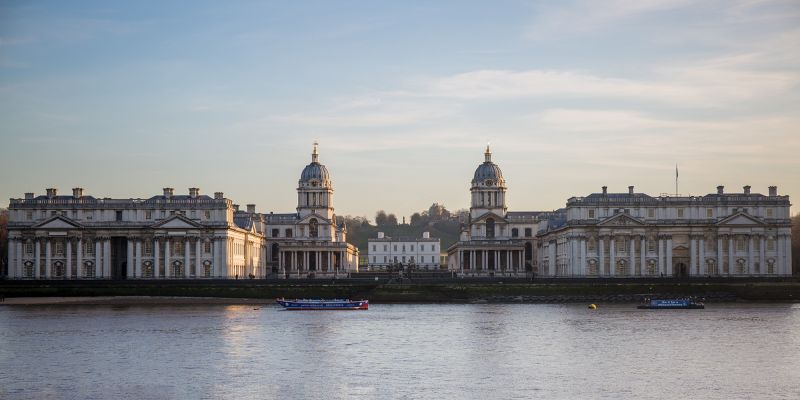
The World Association for Political Economy (WAPE) is pleased to announce its annual forum on the theme “The Wealth of Nations in the Multipolar Age”, marking the 250th anniversary of the publication of Adam Smith’s The Wealth of Nations. We meet at the Old Royal Naval College in Greenwich, London, where the first Chinese translator of the Smith’s works and first principal of Beijing University, Yan Fu, studied.

We invite scholars, researchers, activists, and practitioners to submit their papers for consideration.

The neoclassical and neoliberal appropriation of Smith is simplistic at best and false at worst. Marx, in contrast, rightly regarded Smith as one of his most important intellectual forbears, whose ideas he both valued and criticized in arriving at his own critique of political economy.

Marx considered Smith to be among those investigating ‘the real internal framework [Zusammenhang] of bourgeois relations of production’ — in particular, through his concept of the division of labour, at once advancing the productive capacities of human labour and stunting the human personality, and his belief that labour was ‘the real measure of the exchangeable value of all commodities’.

Indeed, the centrality of these and other themes of Smith’s work to Marx’s indicates that many of them point beyond capitalism itself.

The Wealth of Nations also addressed, as the curtain rose on the modern capitalist world, the central issue of what makes nations rich or poor. It has formed the running thread of the study of political and geopolitical economy. Today it is central to discussions of the multipolar and pluripolar world, as socialist and other anti-imperialist countries challenge capitalist domination through the increasingly successful pursuit of development, combined with a rejection of the imperial domination that was formative of, and remains fundamental to, capitalism’s very existence.

As in previous years, we will run a geopolitical economy stream to strengthen understanding of what Marx called the ‘relations of producing nations’ of the age of capital, and of the transition away from capitalism.

We commemorate Smith’s The Wealth of Nations this year by inviting submissions that add to existing scholarship on Smith, particularly those that develop the radical and developmental aspects of his thought in the spirit of Marxism, those that investigate his relation to Marx and other critical thinkers since and especially those that which investigate how reconsideration of Smith’s work may contribute to understanding the political and geopolitical economy of the twenty-first century of decaying capitalism, and to advancing socialism in what Marx termed the ‘relations of producing nations’ in the age of multi- and pluripolarity.
Call for Papers

We welcome papers that address theoretical, empirical, or policy-oriented dimensions of the intimately related questions on the themes discussed above and listed below.

Topics

  • Adam Smith’s significance for modern thought
  • The relation of Marx and his successors with Smith
  • The geopolitical economy of the age of capital
  • The political economy of development
  • Advancing productive powers in a multipolar world
  • Modern Forces of Production, Artificial Intelligence, Noonomy, and the Creative Economy
  • The negative effects of the dollar as a world currency and of USD-backed stablecoins
  • The significance and impact of China’s recent policy initiatives (such as the Global Governance Initiative)
  • The role of socialism in the political and geopolitical economy of capitalism
  • The emerging role of organisations anddstructures such as BRICS and the Shanghai Cooperation Organisation
  • The role of regional blocs and institutions in shaping multipolar governance
  • The ecological challenge and resource politics in a multipolar world
  • Shifts in labour relations and production systems under multipolarity
  • International production networks
  • Livelihoods world-wide and the "Death Line" for the American People
  • Contemporary forms of Hegemonism, Imperialism, Colonialism, and Racism
  • Upholding Integrity and Innovating Marxist Political Economy Through International Cooperation
  • Studies on the International Schools of Innovative Marxism
  • Macroeconomic modelling

Submission

Abstracts (250–300 words) with keywords. Indicate stream and format (paper, panel, roundtable).

Please include a brief biography (up to 150 words), highlighting your academic affiliation and key research interests.

Papers selected for presentation will be eligible for consideration in WAPE-affiliated journals (World Review of Political Economy, International Critical Thought, World Marxist Review).

Submit Abstract via conference manager →

Key Dates

  • Abstract deadline: March 15
  • Decisions: March 30
  • Final programme: July 10

Venue — University of Greenwich (Greenwich Campus)

A UNESCO World Heritage setting on the River Thames, easily accessible via DLR and rail.

Location

Old Royal Naval College, Greenwich, London SE10 9LS. Main sessions in Queen Anne Court.

Open in Google Maps →

Travel

DLR to Cutty Sark, rail to Greenwich, Thames Clippers boat service. Central London 20–30 minutes.

Accommodation

Hotels in Greenwich, Deptford, Canary Wharf; limited campus rooms. Book early in summer season.

Open in Google Maps →

Greenwich campus view with historic buildings

Programme (Draft)

A mix of keynotes, parallel sessions, and thematic roundtables.

Day 1 — Tue, Aug 5

  • 09:30 Opening & Keynote
  • 11:00 Parallel Sessions A
  • 14:00 Roundtables
  • 17:30 Welcome Reception

Day 2 — Wed, Aug 6

  • 09:30 Keynote
  • 11:00 Sessions B
  • 14:00 Policy Forum
  • 19:00 Conference Dinner

Day 3 — Thu, Aug 7

  • 09:30 Sessions C
  • 12:30 Closing Plenary
  • 14:00 Campus Tours

Detailed programme with speakers and rooms will be published after acceptance decisions.

Registration

Early-bird rates available.

Fees

  • Early-bird (until June 20): £200
  • Standard: £250

What’s Included

Access to all sessions, conference materials, refreshments, buffet lunches, Conference Dinner.

Register Online

Secure payment and abstract submission via the portal.

Open registration portal →