August 5–7 · University of Greenwich · London UK

19th Annual Forum of the World Association for Political Economy

The Wealth of Nations in the Multipolar Age

Adam Smith’s contradictions are of significance
because they contain problems which it is true he
does not solve, but which he reveals by
contradicting himself. His correct instinct in this
connection is best shown by the fact that his
successors take opposing stands based on one
aspect of his teaching or the other.

- Karl Marx, Theories of Surplus Value I, 151.

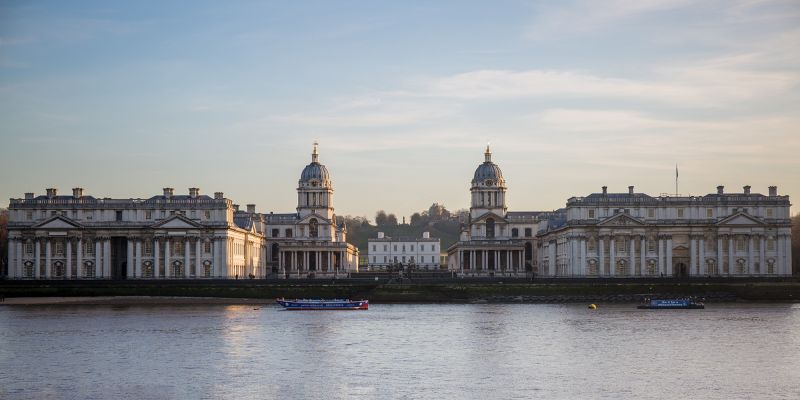
The World Association for Political Economy (WAPE) is pleased to announce its annual forum on the theme “The Wealth of Nations in the Multipolar Age”, marking the 250th anniversary of the publication of Adam Smith’s The Wealth of Nations. We meet at the Old Royal Naval College in Greenwich, London, where the first Chinese translator of the Smith’s works and first principal of Beijing University, Yan Fu, studied.

We invite scholars, researchers, activists, and practitioners to participate in the conference.

The neoclassical and neoliberal appropriation of Smith is simplistic at best and false at worst. Marx, in contrast, rightly regarded Smith as one of his most important intellectual forbears, whose ideas he both valued and criticized in arriving at his own critique of political economy.

Marx considered Smith to be among those investigating ‘the real internal framework [Zusammenhang] of bourgeois relations of production’ — in particular, through his concept of the division of labour, at once advancing the productive capacities of human labour and stunting the human personality, and his belief that labour was ‘the real measure of the exchangeable value of all commodities’.

Indeed, the centrality of these and other themes of Smith’s work to Marx’s indicates that many of them point beyond capitalism itself.

The Wealth of Nations also addressed, as the curtain rose on the modern capitalist world, the central issue of what makes nations rich or poor. It has formed the running thread of the study of political and geopolitical economy. Today it is central to discussions of the multipolar and pluripolar world, as socialist and other anti-imperialist countries challenge capitalist domination through the increasingly successful pursuit of development, combined with a rejection of the imperial domination that was formative of, and remains fundamental to, capitalism’s very existence.

As in previous years, we will run a geopolitical economy stream to strengthen understanding of what Marx called the ‘relations of producing nations’ of the age of capital, and of the transition away from capitalism.

We commemorate Smith’s The Wealth of Nations this year by inviting submissions that add to existing scholarship on Smith, particularly those that develop the radical and developmental aspects of his thought in the spirit of Marxism, those that investigate his relation to Marx and other critical thinkers since and especially those that which investigate how reconsideration of Smith’s work may contribute to understanding the political and geopolitical economy of the twenty-first century of decaying capitalism, and to advancing socialism in what Marx termed the ‘relations of producing nations’ in the age of multi- and pluripolarity.
Keynote Speakers

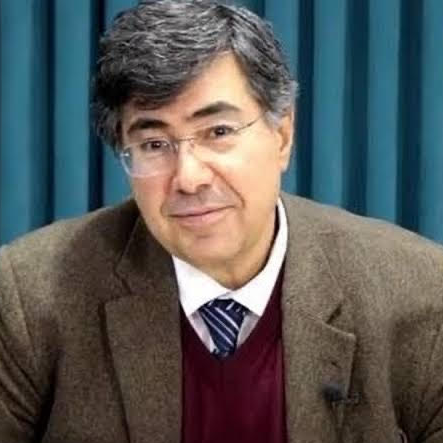
Prof. Doğan Göçmen

Prof. Doğan Göçmen

Dokuz Eylül University

Read biography →

Doğan Göçmen is a Professor of Philosophy at the Faculty of Letters, Department of Philosophy, Dokuz Eylul University, where he teaches modern and contemporary philosophy since 2012. He produced a doctoral thesis on “Adam Smith Problem” and received his PhD in Social Sciences from the University of Edinburgh, following postgraduate study at the same institution and undergraduate training in sociology, political science and philosophy at the University of Hamburg. Professor Göçmen has held previous academic appointments as Associate Professor at Dokuz Eylul University and Adiyaman University in Turkey.

In addition to his teaching and research duties, he has undertaken extensive academic and administrative service, including membership in faculty boards, accreditation and quality commissions, and numerous doctoral and professorial appointment and examination committees across Turkish universities.

Doğan Göçmen currently serves on the editorial and advisory boards of several national and international philosophy journals, including Sofist Uluslararası Felsefe Dergisi, Arkhe-Logos, Özne Felsefe Bilim ve Sanat Yazıları. He was also member of the journal Topos: Internationale Beiträge zur dialektischen Theorie which was published by German philosopher Hans Heinz Holz until 2011.

Professor Göçmen’s primary research interests lie in modern philosophy, classical German philosophy, political philosophy, social and moral philosophy, and the history of philosophical and political economy, with particular emphasis on Aristotle, Epicurus, Stoic philosophy, Hobbes, Adam Smith, Kant, Hegel, Marx, Luxemburg, Wittgenstein, Lukács, Hans Heinz Holz, Turkish intellectual history, and the Scottish Enlightenment.

He has contributed extensively to debates on freedom, justice, morality, labour, enlightenment, secularism, social and political theory, and modernity. He has participated in funded research projects, including internationally supported research on education and refugee studies. His scholarly output includes over 180 academic publications in different languages, comprising articles in peer reviewed international and national journals, numerous book chapters, encyclopaedia entries, and three books published by major international publishers, and a substantial body of editorial work. He is the author, editor, or contributor to more than 30 academic books, many of which address the philosophical foundations of modern society, political economy, ethics, and science. Currently, Göçmen is general editor of the book series ‘Philosphy for Everyone’ published by Say Publications in Turkey.

In recognition of his academic standing, Professor Göçmen is a frequent invited speaker at national and international conferences, philosophy festivals, and public intellectual forums, and has played leading roles in the organization of major philosophical events, including philosophy days in Urla/Izmir, and in Salihli/Manisa, international Hegel, Adam Smith, and Scottish Enlightenment conferences. He has supervised a large number of doctoral and postgraduate theses and continues to contribute actively to philosophical education and public debate through lectures, publications, interviews, and cultural academic initiatives.

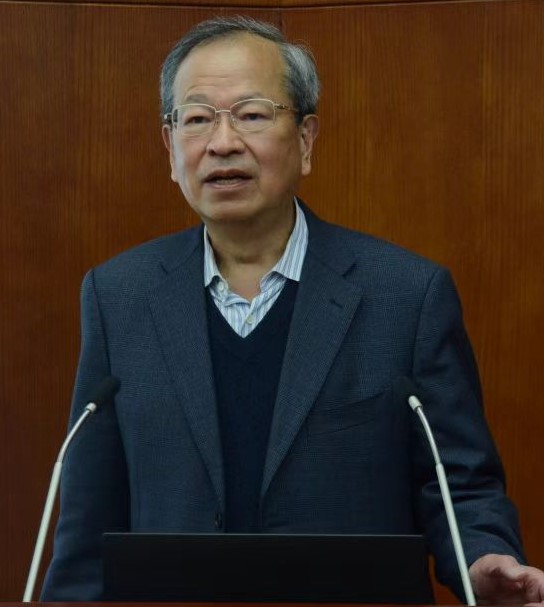
Prof. Jian Xinhua

Prof. Jian Xinhua

Wuhan University

Read biography →

Jian Xinhua is a Professor at the School of Economics and Management, Wuhan University, and a Distinguished Professor at Nanchang University. He is a recipient of the Special Government Allowance from the State Council of China, an expert member of the National Social Science Fund of China (NSSFC) Discipline Review Group, the Chief Expert for major projects of the NSSFC, and a Chief Expert for the Marxist Theory Research and Construction Project. He currently serves as an Advisor to the China Association for Political Economy and is an Adjunct Professor at multiple institutions, including the China National School of Administration. He previously held positions as Vice President of the China Society for Research on Das Kapital, Vice President of the China Association for Political Economy, Executive Vice President of the Chinese Industrial Economics Society, and President of the Hubei Industrial Economics Society.

His primary research interests encompass China's economic development and reform, as well as socialist economic theory. Professor Jian has led over 20 research projects, including major and key projects funded by the National Social Science Fund, the National Natural Science Foundation of China, and the Ministry of Education. He has authored or edited more than 30 academic books and teaching materials. He has published over 400 research articles in journals and newspapers, including prestigious outlets such as Economic Research Journal, Qiushi Journal, Management World, Studies on Marxism, People's Daily, Economic Daily, Guangming Daily, and the World Review of Political Economy. More than 100 of his articles have been reprinted by influential publications and collections, including Xinhua Digest, Marxism Digest, Red Flag Digest, and the Information Center for Social Sciences of Renmin University of China (Replicated Journal Materials).

In recognition of his scholarly contributions, Professor Jian has received over 20 awards for scientific research achievements. These include 12 provincial and ministerial-level or higher awards, such as the China Government Publishing Award, the "Five One Project" Award from the Publicity Department of the Communist Party of China Central Committee, the Outstanding Achievement Award for Scientific Research in Higher Education Institutions from the Ministry of Education, the Outstanding Achievement Award in Population Science from the State Family Planning Commission of China, the Outstanding Achievement Award in Social Sciences from Hubei Province, the Outstanding Achievement Award in Social Sciences from Jiangxi Province, the An Zijie International Trade Research Award, and the "World Marxian Economics Award" from the World Association for Political Economy.

📄 Call for Papers (Archived — closed)

📅 Submission deadline has passed. The call for papers closed on April 15, 2026. This information is preserved for reference only.

Call for Papers (Archived)

We welcome papers, panels and roundtables that address theoretical, empirical, or policy-oriented dimensions of the intimately related questions on the themes discussed above and listed below.

Topics

  • Adam Smith's significance for modern thought
  • The relation of Marx and his successors with Smith
  • The geopolitical economy of the age of capital
  • The political economy of development
  • Advancing productive powers in a multipolar world
  • Modern Forces of Production, Artificial Intelligence, Noonomy, and the Creative Economy
  • The negative effects of the dollar as a world currency and of USD-backed stablecoins
  • The significance and impact of China's recent policy initiatives
  • The role of socialism in the political and geopolitical economy of capitalism
  • The emerging role of organisations and structures such as BRICS and the Shanghai Cooperation Organisation
  • The role of regional blocs and institutions in shaping multipolar governance
  • The ecological challenge and resource politics in a multipolar world
  • Shifts in labour relations and production systems under multipolarity
  • International production networks
  • Livelihoods world-wide and the "Death Line" for the American People
  • Contemporary forms of Hegemonism, Imperialism, Colonialism, and Racism
  • Upholding Integrity and Innovating Marxist Political Economy Through International Cooperation
  • Studies on the International Schools of Innovative Marxism
  • Macroeconomic modelling

Submission (Closed)

Abstract deadline: March 15, 2026 (passed)

Abstracts (250–300 words) with keywords. Indicate stream and format (paper, panel, roundtable).

Papers selected for presentation will be eligible for consideration in WAPE-affiliated journals (World Review of Political Economy, International Critical Thought, World Marxist Review).

Key Dates (Archive)

  • Abstract deadline: March 15, 2026 (closed)
  • Decisions: April 2, 2026
  • Extended Abstract deadline: April 15, 2026
  • Late Decisions: April 30, 2026
  • Final programme: July 10, 2026

Venue — University of Greenwich (Greenwich Campus)

A UNESCO World Heritage setting on the River Thames, easily accessible via DLR and rail.

Location

Old Royal Naval College, Greenwich, London SE10 9LS. Main sessions in Queen Anne Court.

Open in Google Maps →

Travel

DLR to Cutty Sark, rail to Greenwich, Thames Clippers boat service. Central London 20–30 minutes.

Accommodation

Hotels in Greenwich, Deptford, Canary Wharf. Book early in summer season.

Open in Google Maps →

🏨 Limited campus rooms: Devonport House (14 rooms on first-served basis). Book now →

Greenwich campus view with historic buildings

Programme (Draft)

A mix of keynotes, parallel sessions, and thematic roundtables.

Day 1 — Weds, Aug 5

  • 09:30 Opening & Keynote
  • 11:00 Parallel Sessions A
  • 14:00 Roundtables
  • 17:30 Welcome Reception

Day 2 — Thurs, Aug 6

  • 09:30 Keynote
  • 11:00 Sessions B
  • 14:00 Policy Forum
  • 19:00 Conference Dinner

Day 3 — Friday, Aug 7

  • 09:30 Sessions C
  • 12:30 Closing Plenary
  • 14:00 Campus Tours

Detailed programme with speakers and rooms will be published July 10.

Registration

Early-bird rates available.

Fees

  • Early-bird (until June 20): £200
  • Standard: £250
  • Student: £100
  • Low-income: £100 Apply

What’s Included

Access to all sessions, conference materials, refreshments, buffet lunches.

Register Online

Secure payment via the University of Greenwich online store.

Open registration portal →

Committees

Organising Committee

Prof. Radhika Desai
University of Manitoba

Alan Freeman
University of Greenwich

Prof. Bruce Cronin
University of Greenwich

Dr. Francisca Da Gama
University of Greenwich

Dr. Will Orr
Architectural Association School of Architecture

Sophi Tranchell
Pluto Press

Keith Bennett
Friends of Socialist China

Carlos Martinez
Friends of Socialist China

Yihui Lu
Anglia Ruskin University

Scientific Committee ▼

Scientific Committee

Prof. Niemeyer Almeida Filho
Universidade Federal de Uberlândia

Keith Bennett
Friends of Socialist China

Dr. Jenny Clegg
University of Central Lancashire

Dr. Adotey Bing-Pappoe
University of Greenwich

Prof. Yanguang Chen
Goldsmiths, University of London

Prof. Bruce Cronin
University of Greenwich

Dr. Francisca Da Gama
University of Greenwich

Guido De Marco
Association for the Redistribution of Labour

Prof. Radhika Desai
University of Manitoba

Prof. Wolfram Elsner
University of Bremen

Alan Freeman
University of Greenwich

Prof. Doğan Göçmen
Dokuz Eylul University

Hugh Goodacre
London School of Economics

Dr. Joe Lin
University of Bristol

Prof. Stavros Mavroudeas
Panteion University

Sousuke Morimoto
Bristol University

Dr. Will Orr
Architectural Association School of Architecture

Michael Roberts
Independent Researcher

Dr. Tomas Rota
Goldsmiths, University of London

Prof. Alfredo Saad Filho
Queen's University Belfast

Prof. Roger Seifert
University of Wolverhampton

Dr. Yanan Song
SOAS, University of London

Dr. Julian Wells
London School of Economics

Jonathan White
Marx Memorial Library